
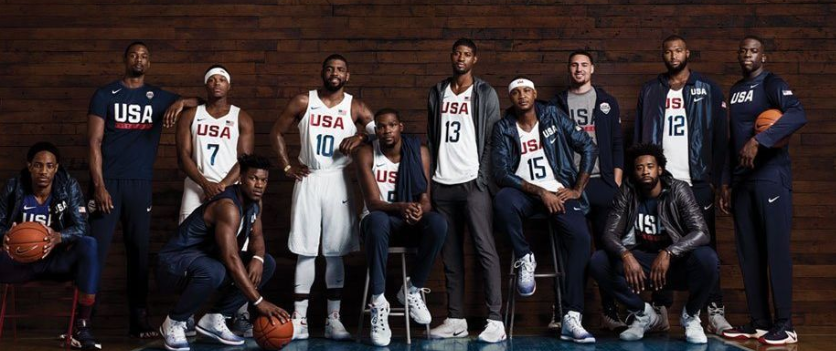
Picture Credit
NBA efficiency is often read as a clean number: points per shot, assists per turnover, usage rate, on-off impact. The schedule makes it messier. A player’s line after two nights off does not carry the same context as a line on the second night of a back-to-back, especially when travel, opponent style, and role all change at once.
Even in a league built on speed, recovery matters. Players need time away from the court, and fans often look for their own change of pace after the game through highlights, stats, podcasts, fantasy tools, or other digital entertainment formats such as sweepstakes casinos. The key point for analysis remains the same: rest days are not background noise. They are part of the performance environment.
Why rest days change the meaning of efficiency
The NBA regular season asks teams to survive repeated rhythm changes. A club can move from a home game to a road game, from a slow half-court opponent to a transition-heavy matchup, and from a full rotation to a shortened bench in a matter of days. That is why player efficiency should never be separated from rest context. For high-usage guards, limited rest can show up in shot selection before it shows up in scoring average. Pull-up threes may come earlier in the clock, drives may end in kick-outs instead of finishes, and defensive pressure can fade late in quarters. For big men, the signs can be different: slower second jumps, fewer contested rebounds, and less activity in deep drop or switch coverage. This does not mean every poor shooting night is fatigue. It means the same stat line can tell a different story when placed beside the calendar.
The stats that travel better across the schedule
Basic box-score numbers can exaggerate or hide schedule stress. Points are useful, but they do not show how hard a player worked for those points. Minutes matter, but 36 minutes in a slow game and 36 minutes in a track meet are not the same physical task. More stable evaluation comes from combining role, efficiency, and context. Usage rate helps show how much of the offense ran through a player. True shooting percentage can add shot value context. Player Impact Estimate and other all-in-one metrics can offer a broader snapshot, though they should not replace film or matchup detail.
| Rest context | What can change | Better way to read the line |
| Back-to-back | Legs, closeouts, late-game shot quality | Compare shot profile, not only points |
| One day off | Normal rhythm, but travel may matter | Check minutes, opponent pace, and role |
| Two or more days off | More recovery and practice time | Look for defensive activity and decision speed |
| Third game in four nights | Bench depth and matchup load become bigger | Separate star output from team-wide fatigue |
| Post-travel game | Timing and energy may start unevenly | Watch first-quarter pace and turnover quality |
The key is not to excuse every dip. The key is to avoid treating every dip as a skill decline.
How player roles react to rest gaps
Rest affects players differently because roles are not equal. A spot-up wing may cover the hardest scorer on defense, sprint the corners, and take only eight shots. A primary creator may initiate 60 or more actions, absorb traps, and still be expected to close the game. Their fatigue profiles are not the same. For stars, the burden is often decision fatigue. They are asked to read coverages, manage tempo, protect the ball, and produce late-clock offense. On short rest, the first visible change can be passing precision rather than scoring. A few rushed reads can turn an efficient night into a messy one. For younger players, rest can affect consistency. Athletic bursts may remain intact, but positioning, foul discipline, and off-ball timing can swing from game to game. For veterans, the issue can be recovery management. They may still control the game mentally, while their rim pressure or lateral quickness becomes more selective. That is why player evaluation should ask a simple question: what did the player’s role demand that night?
What U.S. fans should check before judging a performance
A smarter read of NBA efficiency does not require a front-office database. It requires a repeatable checklist. Before deciding that a player was great, careless, tired, or overrated, check the game environment.
Use these signals together:
- Rest gap: Was it a back-to-back, one day off, or a longer break?
- Travel: Was the team changing time zones or finishing a road swing?
- Opponent style: Did the opponent speed the game up or force late-clock offense?
- Minutes pattern: Did the player carry long stretches without normal rest?
- Shot diet: Were the attempts at the rim, from catch-and-shoot looks, or self-created late in the clock?
- Defensive task: Was the player hiding on defense or taking the hardest assignment?
- Bench support: Did the rotation protect the starter, or did the starter absorb every pressure point?
This checklist is especially useful during national TV games, NBA Cup nights, and late-season playoff races, when narratives move faster than context. A player can score 30 and still look worn down. Another can score 16 and quietly stabilize every possession.
Why rest policy matters, but does not solve the puzzle
The league’s player participation rules changed the public conversation around rest. Teams face stronger expectations around star availability, national broadcasts, and long-term shutdowns. That has made rest management more visible, not simpler.
Coaches still have to balance medical input, competitive pressure, travel, and the standings. Players still want rhythm, especially scorers who rely on timing. Fans still want to see the names they paid to watch. Those interests do not always fit neatly into one box. The practical result is that rest now sits between performance science and entertainment value. The box score shows what happened. The schedule helps explain why it may have happened.
The smarter takeaway
Rest days do not create a universal formula for NBA player efficiency. They create a frame. A guard missing five jumpers on tired legs, a center losing rebounding position after heavy minutes, or a wing looking sharper after two days off all belong in that frame. The best habit is to read efficiency in layers: schedule first, role second, opponent third, stat line fourth. That order protects readers from shallow conclusions. In an 82-game season, the smartest NBA analysis is not the loudest reaction after one night. It is the one that understands what the calendar did to the performance.